Quick Summary
An emergency roofing figure gets built from parts rather than pulled from a national average. Labor carries the largest share, materials the second, and severity, roof access and timing decide how many hours the job takes. Insurance answers sudden damage from covered perils. Tarping remains the cheapest stage of the whole episode.
Water coming through a ceiling at two in the morning creates a particular kind of panic. The damage is visible, the weather is still going, and the first question most homeowners reach for is what this will cost. Searching for an answer rarely settles the nerves. Published figures for emergency roof repair cost swing from a few hundred dollars to well past five figures, and a gap that wide starts to feel useless. There is real logic sitting underneath those numbers, though. Here is what actually shapes that final figure.
What Actually Counts as a Roofing Emergency
Not every leak justifies an after-hours call, and knowing where that line sits protects your budget. Urgent work applies when sudden damage creates an active leak or leaves your home open to the weather.
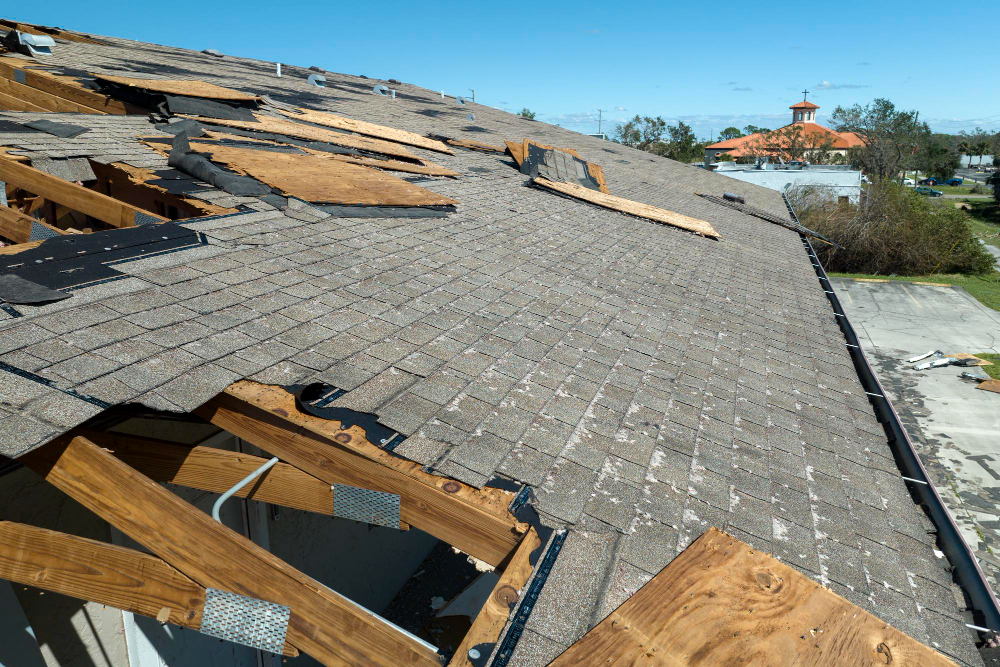
Storm impact, a fallen limb, wind stripping a section of covering, and structural failure all sit inside that category. What links them is water entering the building right now, with more weather on the way. Speed becomes worth paying for once containment outranks cost control.
Slower problems follow a different path entirely. A stain that appeared last month, a few loose shingles spotted from the driveway, or granules collecting in a gutter can wait for a scheduled visit. Calling those in at midnight adds a premium to work that would cost less on a Tuesday morning.
The honest test is whether waiting until business hours would let more water inside. If the answer is yes, the surcharge earns its keep. If the answer is no, patience saves you real money.
Why Published Cost Ranges Vary So Dramatically
Two homes hit by the same storm can receive very different invoices, and the reason has nothing to do with one owner being overcharged. An emergency figure gets built from parts rather than pulled from an average. Labor forms the largest of those parts, and the Bureau of Labor Statistics puts the median annual wage for roofers at $55,440 as of May 2025, with the highest paid tenth of the trade above $81,720.
Those are wages rather than billing rates, since a legitimate hourly charge also carries insurance, vehicles, equipment, and licensing on top. Materials form the second part, tracked through the producer price index for asphalt shingle and coating materials, which recent readings have held at more than three times its 1984 baseline.
Three variables then decide how many hours the work takes, and they explain almost every gap between one invoice and another. Severity leads, since securing a lifted section of covering sits worlds apart from addressing saturated decking underneath.
Access follows close behind, as steep pitches, tall walls, and awkward rooflines slow every stage of the job and raise the hours it takes. Timing supplies the last of them, and nobody controls that when a storm arrives at midnight.
What You’re Really Paying for in an Emergency Call
Understanding the invoice removes most of the anxiety attached to it. An urgent visit is not the same work at an inflated rate. You are buying immediate availability, a crew willing to leave home at an unsociable hour, and the judgment required to stabilize a situation before permanent work becomes possible.
Someone has to assess a wet roof in the dark, decide what will hold until morning, and carry the equipment to make that happen. That skill is the product, and the covering material is almost an afterthought. None of it happens on a normal schedule, which is why the work carries a premium.
Emergency Tarping and What Temporary Protection Costs
Stabilization almost always arrives before any permanent solution, and tarping is the tool that delivers it. A properly installed tarp halts water entry, buys time for materials to be sourced, and stops a contained problem from spreading through insulation and framing.
What it costs comes down to three things, each of which you can assess yourself. How much area needs covering, how steep the roof is, and how securely the tarp has to be anchored to survive whatever weather is still coming. A small section on a shallow slope sits at one end of that scale.
Whatever the emergency roof leak repair cost comes to, treat it as the cheapest part of the episode. Once water saturates insulation, soaks drywall, and reaches framing, you have moved well beyond roofing into interior restoration with several trades involved. Money spent on containment routinely prevents far larger sums later. Anyone tempted to climb up alone should know that wet roofing surfaces during active weather cause serious injuries every year.
What Maine’s Climate and Short Season Add to the Bill
Local conditions shift national figures in ways worth understanding before you need the number. Repeated freezing and thawing does more damage here than steady cold ever would.
Research from the National Institute of Standards and Technology records that asphalt shingles meet thermal cycling, ultraviolet radiation, and freeze and thaw events across their service life, alongside direct mechanical loads including wind-induced uplift, and that published literature indicates their ability to withstand those loads may be compromised after that weathering exposure.
Small openings widen through each cycle until they turn into genuine entry points for water, which is why any asphalt roofing contractor working in this climate treats seasonal inspection as routine rather than optional.
Season length creates a second pressure that homeowners feel directly. Exterior work in this state concentrates into a short warm stretch, which pushes demand into fewer months and keeps schedules tight through summer and early fall.
Winter emergencies therefore land during the window when crews face the hardest conditions and the shortest daylight. A January call reflects every one of those pressures at once, which explains why identical damage can feel different in different months.
Homeowners who arrange attention during warmer months genuinely sidestep much of that pressure. Planning ahead remains the only reliable defense against the seasonal squeeze.
Where Insurance Steps in, and Where It Doesn’t
Coverage questions surface almost immediately, and the answers follow a consistent pattern across most policies. Insurers generally respond to covered perils, meaning sudden and accidental damage traced to an identifiable event, meaning wind, hail, or a fallen tree.
That is precisely what homeowners insurance exists to address. Deductibles for these events work differently from the rest of your policy, though, and the difference catches people out. Reading the fine print before you need it saves a great deal of frustration later.
According to the Insurance Information Institute, wind-related deductibles are usually calculated as a percentage of a home’s insured value rather than as a flat dollar amount, typically falling between 1 and 5 percent.
On many homes, that threshold exceeds the cost of the work entirely. Gradual deterioration receives different treatment again, since wear, aging materials, and deferred upkeep sit outside standard coverage.
Photograph everything before cleanup begins, contact your insurer before authorizing permanent work, and keep every invoice you receive, and read your declarations page before storm season rather than after.
The Cost of Waiting Until Morning
Delay carries its own price tag, and it compounds faster than most homeowners expect. Water moving through a roof assembly finds insulation first, where saturation strips away thermal performance permanently.
Drywall follows, then framing, then the finishes you actually care about. Mold establishes itself within days given the right temperature and moisture. Each stage adds a separate trade to the eventual invoice, and every one of those trades brings its own minimum charge. Restoration crews then follow the roofer onto the job.
Weighing a surcharge against that progression usually settles the question quickly. The genuine risk is not the premium on the call, it is the interior work that arrives behind it.
Attempting a temporary fix yourself rarely improves the arithmetic either, since improvised patching on a wet, pitched surface tends to redirect water rather than stop it. The damage then lands in exactly the places that cost the most to restore. Speaking with a professional at the moment of discovery narrows nothing, while every hour of delay shrinks what a crew can still save.
Getting a Straight Answer Before You’re in a Crisis
Urgent roofing work rewards preparation far more than research. Homeowners who fare best are the ones who already understood their contractor’s fee structure, their policy terms, and their roof’s actual condition before anything went wrong.
Knowing those three things turns a frightening night into a manageable expense with a predictable path forward. Preparation costs nothing and changes everything about how that night unfolds.
Monastery Roofing has handled roof repair and installation across Lewiston, Portland, Brunswick, and Augusta for more than fifteen years as a family-run business. Our free inspection tells you where your roof stands long before a storm forces the conversation, and 3D imaging shows you precisely what we found. We never hand work to subcontractors, so our own trained crew handles your home and stands behind it with a lifetime workmanship warranty.
Call us at 207-440-8503 or request your free estimate through our website. We would far rather inspect your roof today than tarp it in February.
FAQs
An urgent call applies when sudden damage creates an active leak or leaves your home open to the weather. Storm impact, a fallen limb, and structural failure all qualify. A stain that appeared last month or a few loose shingles can wait for a scheduled visit. The test is whether waiting until business hours would let more water inside.
The figure is assembled from labor, materials, and hours rather than taken from an average. Federal wage data puts the median annual wage for roofers at $55,440 as of May 2025, with the highest paid tenth above $81,720, and billing rates run higher again once overhead is covered. Severity, access, and timing then determine how long your particular job takes to make safe.
Insurers answer covered perils, meaning sudden and accidental damage from wind, hail, or a fallen tree. Wear, aging materials, and deferred upkeep sit outside that. According to the Insurance Information Institute, wind deductibles usually run as a percentage of your home’s insured value rather than a flat amount, typically 1 to 5 percent, which on many homes exceeds the work itself.